
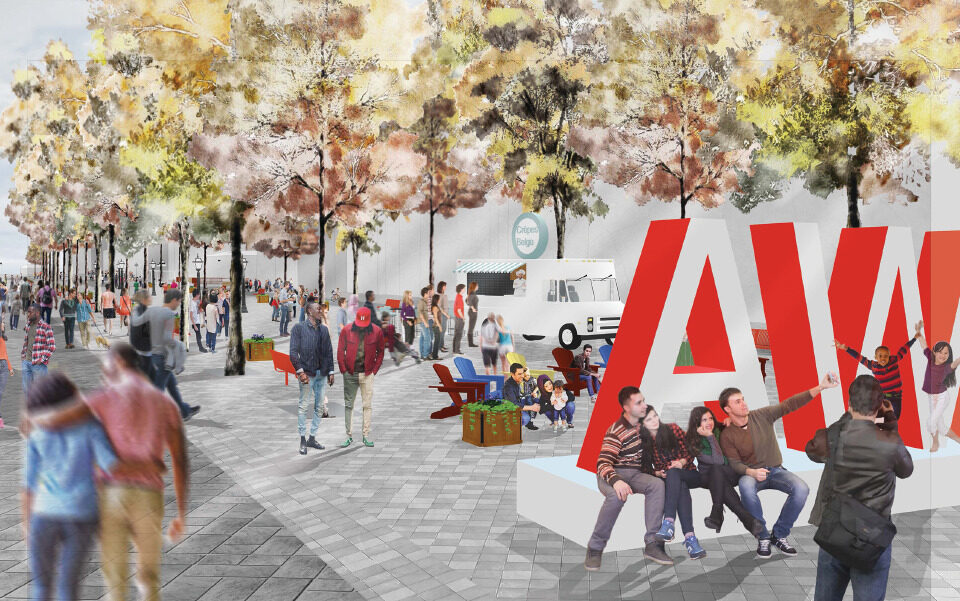
Creating a Better ByWard with #PlacesForPeople; a pro-bono design study by Architects DCA
Being the city we aspire to be starts with local talent and initiatives
Ottawa is a great city. It has all the things that make you want to be proud of this place we call home: beautiful parks, world-class museums, internationally recognized heritage places and a thriving culture of year-round festivals. It is no wonder that the city has topped the list of best cities to live in.
And Ottawa has its Share of Challenges
At the Ottawa Board of Trade City Building Summit in April, one of the speakers highlighted their firm’s investment in Ottawa. They also noted that they have dozens of unfulfilled job openings. Major reasons that impede growth and the ability of private businesses to invest in the city include the high cost of housing and related transportation challenges.
These are issues the city needs to address and for which there are clear, actionable steps that will position Ottawa to thrive in the years ahead.
Housing
Delays in planning approval are one of the largest barriers to housing affordability. The Ontario Association of Architects has, since 2014, identified core issues associated with planning delays in a series of reports. The 2024 updated edition of this report notes that a planning application experiences, on average, 21 months of delay in approval. A sample 100-unit apartment building incurs $5.8 million in economic impact; two thirds of that is incurred by the landowner and is passed on to the end user in the form of higher sale prices or rents. For that 100-unit apartment building, we could save nearly $40,000 per home if we changed our approach to planning approval.
Streamlined planning processes and a development permit system coupled with Development Charge reform and other calls to action could see more homes built more affordably, helping the local economy and reducing pressure on home prices. Coupled with progressive action on pilot projects in alternative building code approaches and funding support for sustainability initiatives, we could change not only how we build, but what we build, creating a more beautiful, more sustainable city.
We need to look at housing, and city building, holistically. What, where and how we build is closely linked to what we spend today (and tomorrow) on roads, parks and social infrastructure. Thinking holistically helps us make better decisions.
The city annually budgets hundreds of millions of dollars for road projects that benefit driving commuters through short, temporary, reductions in commute times. And while funding for affordable housing has increased, it remains a small fraction of the amount spent on roads. Increasing the funding of affordable housing to non-profit and cooperative housing providers, as well as Ottawa Community Housing could create a net-benefit, saving the city money and improving quality of life for those in need, building long term economic resilience. Likewise, we could provide one dollar 99-year leases of publicly owned land to build housing affordability, removing one of the single largest costs in a project, while retaining ownership of public land for public good.

Additionally, housing doesn’t exist in a vacuum. The basis of Ottawa’s planning policy is to create complete communities. Good homes and good neighbourhoods need vibrant and accessible community centres, libraries, parks and other social infrastructure to create great communities. Paraphrasing the 1989 movie, “A Field of Dreams,” if we build it, they will come: build public places to make desirable communities. A renewed focus of investment in public social infrastructure can spur investors to build homes where people want to live: in vibrant, transit connected communities in the heart of the city.
Transportation
How we get around is crucial to our city. It isn’t just about public transit or roads, but all means and forms of transportation.
Ottawa once had a well-respected public transit system that was studied and used as a model for other cities. Since the launch of the LRT, following decades of underfunding and undermining of transit effectiveness, Ottawa’s appreciation of public transit has continued to decline. A recent Ottawa Citizen analysis compared pre-LRT commuting versus today. This showed that commutes, in general, are worse than they were before LRT construction started. Notwithstanding recent investments, the high cost of transit, coupled with unreliability, makes it hard for the public to commit to using transit. Building back trust is a long uphill road.
While we spend willingly on road infrastructure, by comparison, we spend little on active transportation. What we build is frequently not connected, not winter-maintained and is often of mediocre quality. Bikeshare programs that work flawlessly in similar climates like Montreal don’t get off the ground in Ottawa. Sidewalks in the urban area are a hodge-podge of broken concrete, patched pavers and inaccessible crosswalks that deny accessibility to those who need it.
We continue to debate sacrificing street parking to make room for docking stations for bike share or scooter; we push off bus priority lanes to improve well-being for thousands of people and limit implementation to disconnected pilot projects, undermining effectiveness. We need to choose to move quickly on city building projects that have real positive impact on people, creating change in the public interest.
Planning policy that makes it harder, and more expensive, to build homes in urban areas already served by transit and municipal services contributes to automotive poverty in outlying areas. These areas are often celebrated for their bike lanes which are treated as recreational paths, not commuting infrastructure, while that very same infrastructure in the urban areas of the city is marginalized and underfunded.
A lack of affordable, reliable, transit coupled with lack of social infrastructure leads to social isolation. This also puts additional pressure on municipal budgets, increasing the cost of providing schools, parks, recreation centres, fire, police and paramedic services. Lack of complete communities coupled with long commutes and unreliable, unaffordable, transit drives residents to their cars.

Mass Timber, zero operational carbon community centre in Newfoundland; social infrastructure by Architects DCA

Proposed infill Missing Middle apartment building design for Kirkwood Avenue by Architects DCA
Change Needed
To attract investment and become the city we aspire to be, we need to rethink our approach to city building. By creating better places for people, we can improve wellbeing, create affordability and boost our economy. We can tackle the challenging issues our communities face and build a resilient city.
We have the talent, skill and expertise to establish ourselves as role models for better cities, joining the ranks of other G7 capitals in improving quality of life.
A renewed investment in public infrastructure is a proactive driver of private sector investment. As a G7 capital, we need to see our sidewalks, parks and public buildings as key drivers of social wellbeing. That, in turn, creates better economic conditions and attracts residents and tourists to visit our beautiful capital city.
Central to this is design leadership. Cohesive and integrated design policy would link disparate municipal departments while aligning conflicting policies and processes to create improved results. This would reduce costs and improve outcomes, enhance our reputation and create the attractive business and cultural climate our city needs to grow in the years ahead.
Ottawa is home to diverse, talented design firms who are positioned to help achieve broad city building goals. We stand ready to be part of the solution, designing and building the capital city we aspire to be.