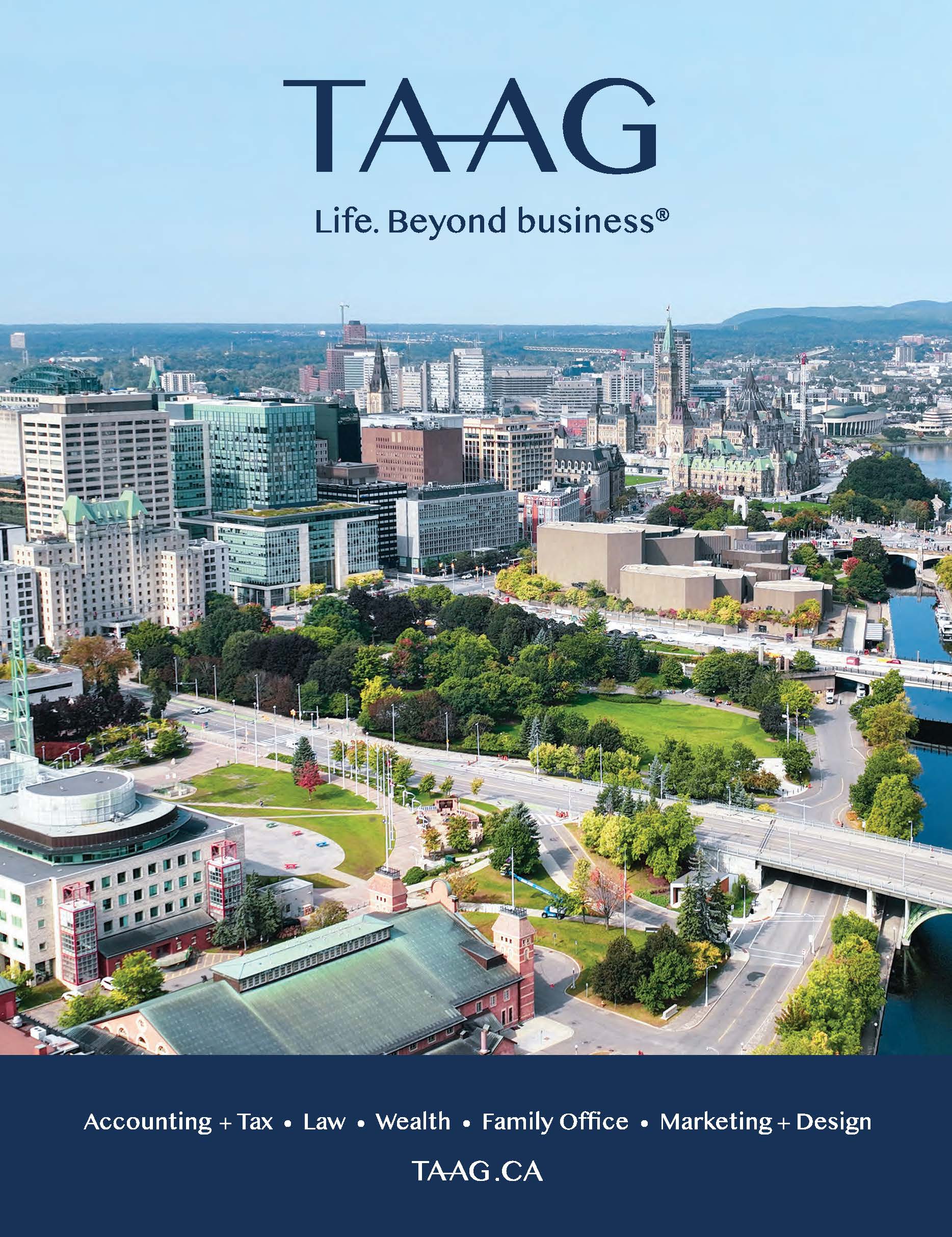
Ottawa’s Next Economy: How Defence and Energy Can Revitalize Ottawa’s Economy and Safeguard Canada’s Future
 Capital
Posted On November 13, 2025
Capital
Posted On November 13, 2025

BY ERIKA CUCCARO
The federal government has long been Ottawa’s anchor employer, with about 154,000 public servants working in the National Capital Region. But that anchor is shifting. Since the rise of hybrid work, vacant federal buildings have become symbols of uncertainty, leaving businesses, residents, and investors waiting for a clear signal on the city’s future. In 2024 alone, nearly 10,000 public service jobs were cut. With a federal mandate to reduce spending by 15 percent by 2028, another 24,000 jobs could be on the line.
For generations, Ottawa’s economy has revolved around the federal payroll. Now, the city needs new engines of growth. Two sectors are emerging as natural leaders: defence and energy. Together, they have the potential to reshape Ottawa’s future, strengthening the local economy while advancing Canada’s national interests.
Building Canada’s Defence Hub
Ottawa is uniquely positioned to lead Canada’s defence renewal. It is the only city with a critical mass of tech talent, federal access, R&D labs, Arctic testing infrastructure, and established recognition as a defence centre. More than 190 aerospace, defence, and security companies are already based here, employing over 10,000 people.
The capital also boasts North America’s highest concentration of tech talent, a bilingual and highly educated workforce, more than 65 federal labs, and the headquarters of key national security agencies, including the Department of National Defence and Public Safety Canada. Each year, Ottawa also hosts CANSEC, one of the largest defence and security trade shows in North America.
Innovation by Design
Global defence clusters don’t happen by chance; they’re built through deliberate strategy. The Washington–Virginia corridor in the United States and the aerospace hub in Toulouse, France both grew from targeted investments that aligned federal priorities with regional strengths. Ottawa has all the right ingredients to follow suit.
The city is already earning global recognition. In 2023, four Ottawa sites were chosen to participate in NATO’s Defence Innovation Accelerator for the North Atlantic (DIANA)—more than any other Canadian city. Among them: Area X.O., a smart mobility test facility managed by Invest Ottawa, and three National Research Council labs. These facilities now form part of 13 DIANA test centres across Canada, positioning Ottawa at the heart of allied defence innovation.
A Living Lab for Defence
Kanata North, Canada’s largest tech park, adds another layer of strength. Global leaders like Lockheed Martin, Thales Canada, CAE, and Kongsberg Geospatial operate alongside hundreds of small and medium-sized enterprises (SMEs), creating a living lab for secure communications, autonomous systems, and aerospace solutions. With so much activity concentrated in one region, collaboration and coordination could transform Ottawa into Canada’s official defence innovation hub—where new technologies are developed, tested, and deployed in support of both national security and economic growth.
The benefits would extend far beyond the city. Aligning defence procurement with Canadian innovators would expand opportunities for SMEs, attract global investment, and create highly skilled jobs. It would also signal to the world that Canada is stepping up with an innovation-driven approach to defence—ideally located in its capital city.
Harnessing Energy to Power Growth
Another key opportunity for growth lies in Ottawa’s energy sector. As the city grows, so does demand for reliable, sustainable power. From defence and data centres to housing and transportation, electrification is accelerating. The Independent Electricity System Operator estimates Ottawa’s electricity demand could rise by 75 percent by 2050.
That growth presents both risk and opportunity. Without investment, outdated systems could constrain development and limit the city’s ability to attract major employers. But with the right planning, Ottawa can modernize its grid, expand storage, and diversify supply to meet rising demand.
Modernizing for the Future
Hydro Ottawa and other local players are working on solutions—from smart grid technologies to renewable integration. The goal is to produce and manage energy more effectively, making Ottawa’s infrastructure resilient and sustainable.

Department of National Defence Headquarters: Carling Campus, Ottawa
Energy is more than a utility; it is critical infrastructure that underpins Ottawa’s competitiveness in sectors like AI, cybersecurity, and defence. A modernized energy system will be essential to powering the next wave of innovation.
The Ottawa Board of Trade (OBOT) Pillar Partners—like Hydro Ottawa, Enbridge, Brookfield Renewable, Bruce Power, and the Kanata North Business Association—are helping to shape the future of Ottawa’s energy landscape by setting advocacy priorities through their participation on OBOT’s Energy Policy Council.
Through innovative projects like Hydro Ottawa’s sewage energy project at LeBreton Flats, the region’s energy leaders are also laying the foundation to house a powerful national defence hub.
Spotlight on Hydro Ottawa
At the centre of this transformation is Hydro Ottawa. As the city’s primary utility, it is pursuing a future-forward strategy that combines infrastructure investment with clean energy innovation.
“Our work is a clear equation: energy equals economic growth,” says Guillaume Paradis, Chief Operating Officer of Distribution and Generation at Hydro Ottawa Group. “We are actively modernizing the grid and partnering on innovative projects to ensure that critical sectors like defence and technology have the resilient power they need to grow and innovate.”
Hydro Ottawa’s plan to meet rising demand focuses on three key areas: accelerating infrastructure development, fortifying the grid against extreme weather, and developing distributed energy sources closer to where power is consumed. These steps increase reliability and give the Ottawa region a clear competitive advantage.
These improvements directly support Ottawa’s critical sectors, including the Department of National Defence (DND) in the National Capital Region.
Driving Progress Through Partnerships
Partnerships are central to Hydro Ottawa’s approach. Collaboration between utilities, government, and private industry is essential to accelerate projects and address Ottawa’s rapidly growing energy needs.
A key example is Hydro Ottawa’s joint planning with Enbridge. By coordinating electricity and natural gas infrastructure, the two companies are creating a streamlined path to meet rising electrification demands and ensure that Ottawa remains competitive.
Energy as an Essential Strategic Asset for Growth
For business leaders, the message is clear: energy is no longer just a utility—it’s a strategic asset. Site selectors now ask about energy availability before even revealing a company’s name, a clear signal that reliable, scalable power is an essential factor in Ottawa’s competitiveness and ability to attract world-class industries. Ensuring Ottawa has the resilient energy supply these industries demand will attract investment, retain top talent, and unlock new opportunities.
Ottawa’s Defence and Energy Advantage
The federal government will always be part of Ottawa’s identity, but the city’s future prosperity depends on diversification. Defence and energy innovation are emerging as dual engines of growth, with the potential to provide high-quality jobs, attract investment, and strengthen Canada’s security.
By harnessing its strengths in defence and energy, Ottawa can do just that—transform from a government town into a capital city that reflects Canada’s position on the global stage.

Trending Now

The OBOT Perspective